
Garage Door Opener Repair
Garage Door Opens, Then Reverses in Winter: Sensors, Ice and Opener Settings
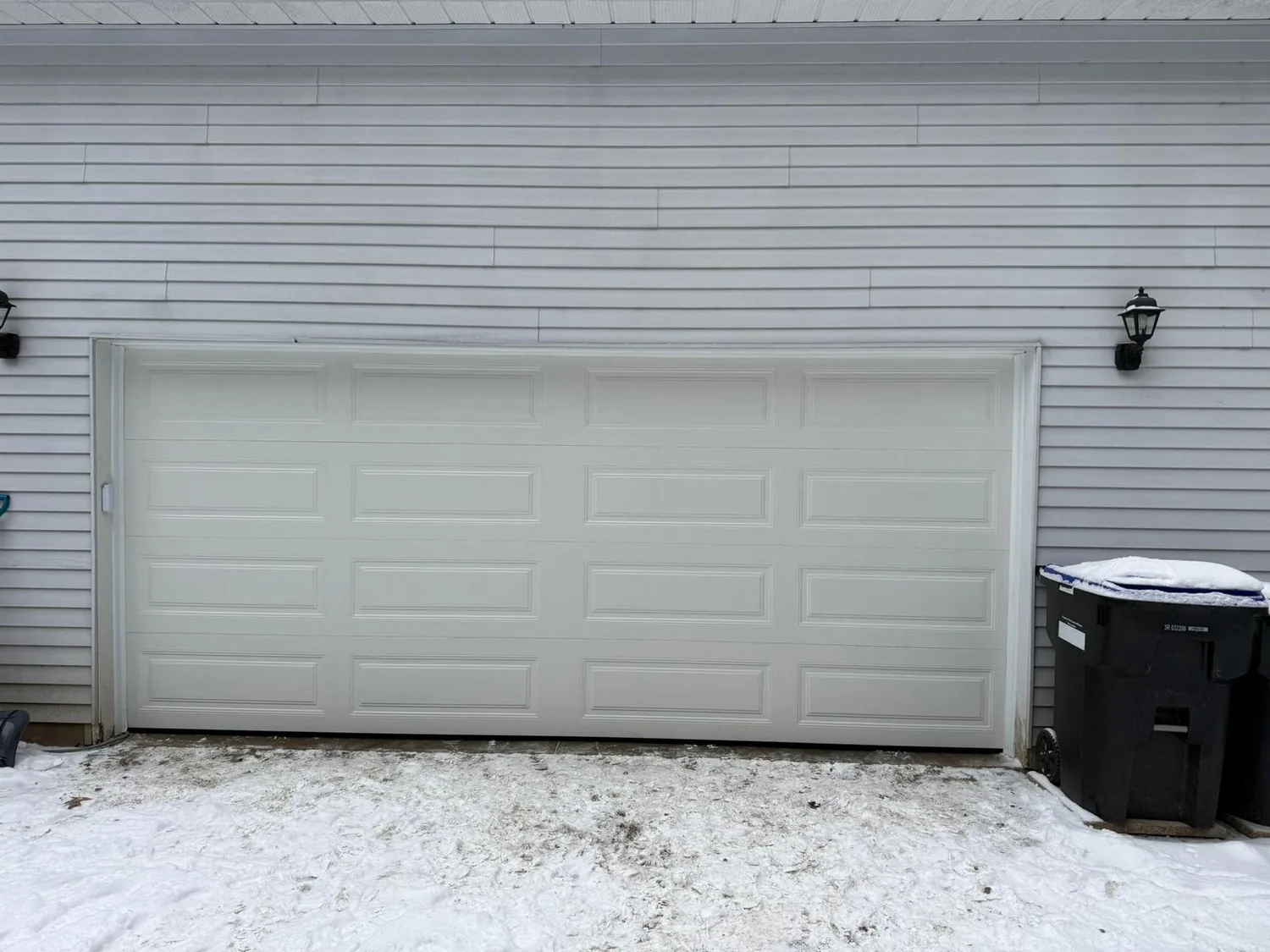
It's minus 15, you're running late, and the garage door goes down, touches the floor and heads right back up. Or it stops halfway and reverses with the opener light blinking. You try again and get the same thing.
That reversing is the opener's safety system doing its job. Something is telling it there's an obstruction. In winter, the cause is usually one of a handful of things, and several are easy to fix yourself.
How an opener decides to reverse
Most home openers have two safety systems:
- Photo-eye sensors. Two small sensors near the bottom of the tracks, one on each side, send an invisible beam across the opening. If anything breaks the beam while the door is closing, the door reverses.
- Force sensing. The opener keeps track of how hard it's working. If the door meets more resistance than expected, it stops and reverses.
Winter can trip both.
Check the photo eyes first
This is the most common cause, and the easiest fix.
- Snow, ice or slush on the lenses. Snow blows in, the car drips slush by the track, or frost forms on the lens. Wipe both lenses with a soft, dry cloth.
- A sensor knocked out of line. Shovels, snow blowers, bins and bikes bump them. Most sensors have a small indicator light. If one is off or blinking, they can't see each other. Loosen the wing nut, aim the sensor at the other one until the light goes solid, then tighten it.
- Something in the beam. A boot tray, a shovel leaning on the wall, or a snowbank creeping in from the driveway.
- Low winter sun. On clear mornings and late afternoons, sun shining straight into a sensor can blind it. If the door only acts up at certain times on sunny days, that's a strong hint. A small shade over the sensor often solves it.
Your opener's manual explains what the sensor lights and the blinking light on the motor unit mean. Many openers blink in a pattern that points to the cause.
Ice on the floor or a frozen bottom seal
If the sensors look fine, check the bottom of the door.
- Frozen to the floor. Meltwater runs under the door, freezes overnight and glues the bottom seal to the concrete. The opener pulls, feels resistance and stops, or keeps pulling and tears the seal. Don't force it. Free it with a plastic scraper or warm (not boiling) water, then clear the ice from that strip.
- An ice ridge. A ridge of ice or packed snow where the door lands makes the door hit something before it reaches the floor, and the opener reads that as an obstruction. Chip it away carefully and keep that strip clear.
- A stiff, cracked bottom seal. Old rubber goes hard in the cold and stops compressing the way it should.
Stiff door, thick grease
Cold makes everything stiffer. Old grease in hinges and roller bearings thickens, worn rollers bind in the track, and the door needs more force to move. The opener notices and reverses.
The giveaway: the door is noisy, jerky or slow in the cold and fine in summer.
A garage door lubricant on the hinges, roller bearings and springs helps. Keep the tracks clean rather than greased. If the rollers are worn out or the door feels heavy, a garage door maintenance visit deals with the cause instead of fighting it all winter.
Don't just turn up the force setting
Many openers have force and travel adjustments, and it's tempting to turn the force up until the door finally closes. Be careful. That setting is part of what stops the door from crushing something under it. Cranking it up to overpower a door that's binding, heavy or frozen down hides the real problem and weakens a safety feature.
If you do adjust it, follow the manual, make small changes, and then test the safety reverse:
- Lay a piece of 2x4 flat on the floor where the door closes. When the door touches it, the door should reverse.
- Wave something through the photo-eye beam while the door is closing. It should reverse.
If either test fails, stop using the opener until it's fixed.
When it isn't really the cold
Sometimes winter just exposes a problem that was already there:
- A broken or weak spring. If the door feels very heavy when you lift it by hand, or you can see a gap in a spring, stop using the opener. Our guide to a broken garage door spring explains what to do and what not to touch.
- A tired opener. Stripped gears, a worn drive or a failing circuit board can look like random reversing.
- A bent track or binding roller. The door catches at the same spot every time.
Get it checked
If you've cleaned the sensors, cleared the ice and the door still reverses, give us a call. Our garage door opener repair service covers sensors, force and travel settings, gears, circuit boards and remotes. We check the door's balance at the same visit, because a lot of opener problems turn out to be door problems.
We work across Toronto and the GTA, including North York, Scarborough, Brampton, Markham and Richmond Hill.
What to tell us when you call
- What the door does: reverses near the floor, halfway down, or right away
- Whether the sensor lights are solid or blinking
- The opener brand and roughly how old it is
- Whether it only happens in the cold, or at certain times of day
- A short video of the door trying to close
Door keeps reversing? Call or text GTA Garage Pro at (365) 360-4168, Monday to Friday, 9 AM to 8 PM.